
Socket Grafting in Liverpool
When a tooth needs to come out, what happens next matters enormously. Socket grafting with A-PRF at Revo Dent ensures your jawbone is preserved and ready to support a lasting dental implant – without the need for more complex surgery later.
Why choose socket grafting at Revo Dent?
- Performed at the same appointment as your extraction - no second visit needed
- A-PRF (Autologous Platelet Rich Fibrin) from your own blood accelerates healing and improves bone quality
- Laser decontamination of the socket before grafting - a step most practices do not include
- Atraumatic extraction techniques that preserve socket walls critical to graft success
- Led by Dr Dix Premsingh Prasath (GDC: 104298) - dual Masters-qualified implant dentist and laser specialist
- Transparent pricing with flexible finance options - no hidden costs
- Established on Rodney Street, Liverpool since 2007
What is socket grafting?
When a tooth is extracted, the bone that previously surrounded and supported the root begins to shrink. This is a natural but often overlooked consequence of tooth loss. Without intervention, the jaw can lose a significant amount of its original width and height within the first year, making a future dental implant harder to place – and sometimes requiring additional, more involved bone augmentation procedures before an implant is even possible.
Socket grafting – clinically referred to as alveolar socket preservation – is a straightforward procedure carried out at the same appointment as your extraction. Bone graft material is placed directly into the empty socket before it is sealed, guiding the body to maintain the bone architecture that was once occupied by the tooth root. The result is a preserved, well-formed ridge of bone that provides the ideal foundation for a dental implant when you are ready.
Research consistently shows that without socket grafting, the jaw can lose up to 50% of its original bone width and up to a third of its height within the first twelve months of extraction. This level of bone loss is irreversible without further surgical intervention and can compromise both the appearance of the face and your future implant options.
At Revo Dent, socket grafting is performed by Dr Dix Premsingh Prasath (GDC: 104298) using premium bone graft materials combined with A-PRF – Autologous Platelet Rich Fibrin prepared from your own blood. This approach accelerates healing, reduces the risk of complications, and produces higher quality bone than graft material alone.
Planning ahead makes a significant difference. Patients who have socket grafting at the time of extraction typically require simpler, shorter implant procedures than those who wait. If there is any chance you may want a dental implant in the future – even years from now – preserving the socket now is the most cost-effective decision you can make.
Why Preserving the Socket Matters
Socket grafting is often the first step in a wider treatment journey. Explore the treatments that follow.

Maintains facial structure
Keeps implant options open
A preserved socket means dental implants can be placed without extensive bone grafting later – avoiding longer timelines and greater cost.
Protects neighbouring teeth
Shorter overall treatment time
Preserving bone at extraction avoids the need for block grafts or sinus lifts later, reducing the total time from extraction to final implant restoration.
The connection between gum health and implant success
Before any extraction and socket grafting, it is essential that any active gum disease is diagnosed and treated. Placing a graft – or later an implant – into a site affected by untreated periodontitis significantly increases the risk of failure.
At Revo Dent, Dr Dix takes a holistic view of every patient’s oral health. Where gum disease is present, our REVO NAP laser gum treatment can stabilise and restore gum health before extraction, creating the healthiest possible environment for the graft to integrate and the implant to succeed long-term.
Socket grafting and missing teeth
Losing a tooth – or having one removed – raises questions that deserve careful answers. Socket grafting is the first step in the optimal pathway for patients choosing a dental implant to replace a missing tooth. It sets the foundation for everything that follows.
Not sure whether an implant is right for you? Our missing teeth page outlines all available options and helps you understand which approach suits your situation.
What Happens During Socket Grafting?
The procedure takes place immediately after your tooth is removed – no second appointment needed.
Step 1: Assessment and A-PRF preparation
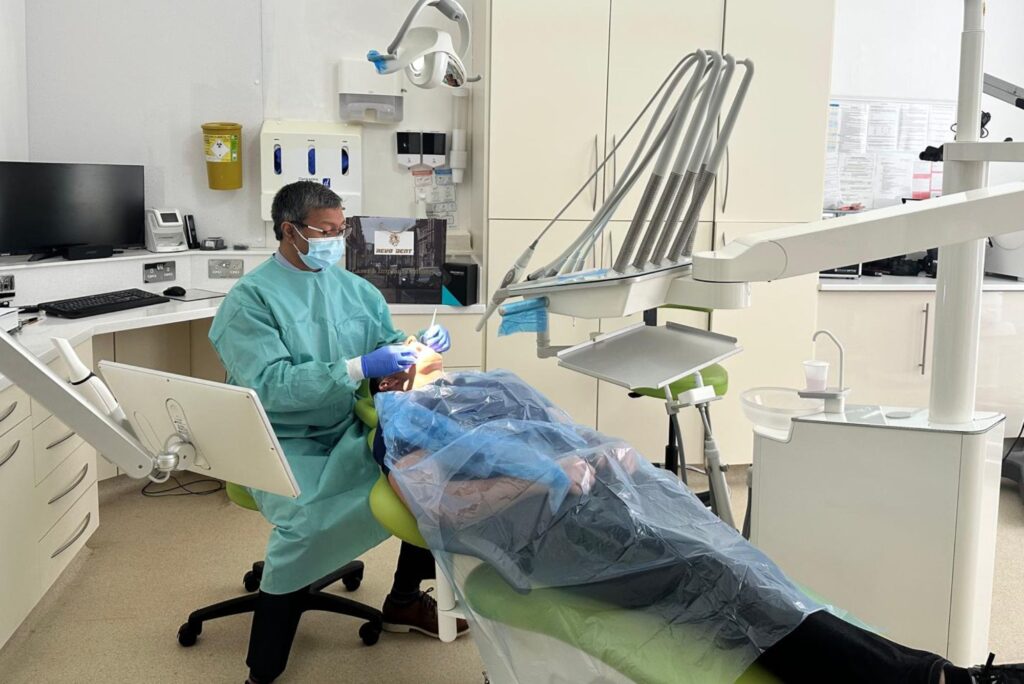
Before the extraction, a small sample of your blood is taken. This is spun in a centrifuge to produce A-PRF – a concentrated membrane of your own platelets and growth factors. This takes approximately 12 minutes and is ready by the time the extraction is complete.
Step 2: Atraumatic tooth extraction
Dr Dix employs atraumatic extraction techniques – using precision instruments and where appropriate, laser technology – to remove the tooth with minimal disruption to the surrounding bone and soft tissue. Preserving the socket walls at this stage is critical to the success of the graft.
Step 3: Socket decontamination with laser
The empty socket is cleaned and decontaminated using our dental laser. This eliminates bacteria that may otherwise compromise healing – a step that conventional extraction does not include.
Step 4: Graft material placement
Premium bone graft material – selected based on the size of the socket and your individual needs – is packed into the socket. The A-PRF membrane is integrated with the graft to deliver growth factors directly to the site, stimulating natural bone regeneration.
Step 5: Closure and protection
The site is closed with a barrier membrane or fine sutures to protect the graft while healing progresses. You will receive clear aftercare instructions before leaving the clinic.
Step 6: Healing and implant planning
Over the following three to six months your bone consolidates around the graft. We monitor your healing with follow-up appointments and imaging. Once ready, your dental implant journey can begin – with the bone volume needed for long-term success already in place. Explore our Smile Gallery to see real patient results.
The A-PRF Advantage
Not all socket grafting is the same. Our use of Autologous Platelet Rich Fibrin sets the standard of care at Revo Dent apart.
A-PRF stands for Autologous Platelet Rich Fibrin. The term autologous simply means it comes entirely from you – a small blood draw taken on the day of your procedure. Your blood is centrifuged to separate and concentrate the platelets, growth factors, and fibrin that naturally drive tissue regeneration.
The resulting membrane is combined with the graft material placed in your socket. Because it is entirely derived from your own biology, there is no risk of rejection or allergic reaction. The concentrated growth factors actively stimulate surrounding cells to regenerate bone and soft tissue faster and more effectively than graft material alone.
The practical difference for patients is meaningful: reduced post-operative discomfort, lower infection risk, faster healing, and – critically – better quality bone at the implant site when the time comes. We also use A-PRF in our implant placement procedures to improve integration and speed recovery.
- Step 1 | A small blood sample is taken on the day - similar to a routine blood test.
- Step 2 | The sample is centrifuged for approximately 12 minutes, separating platelets and growth factors from red blood cells.
- Step 3 | The resulting A-PRF membrane is shaped and incorporated into the graft material.
- Step 4 | Once placed in the socket, growth factors are released over several days, accelerating natural bone and tissue regeneration.
- Outcome | Healthier, denser bone with reduced healing time - the best possible foundation for your implant.
Comparison Table
Bone volume after 12 months
Can lose up to 50% in width
Maintained and consolidated
Implant suitability
May require further block graft or sinus lift
Typically suitable for direct implant placement
Overall treatment time
Longer – additional procedures needed
Shorter – bone is ready when you are
Post-operative healing
Standard extraction recovery
Enhanced by A-PRF and laser decontamination
Facial appearance over time
Bone resorption may alter facial contours
Ridge maintained, facial structure preserved
Future implant options
Restricted – bone loss limits choices
Preserved – full range of options retained
Expertise You Can Trust
Dr Dix Premsingh Prasath
BDS, MSc Implant Dentistry, MSc Restorative Aesthetic Dentistry, Fellowship in Laser Dentistry | GDC: 104298 | Principal Dentist, Revo Dent Liverpool
- BDS, qualified 2003 – GDC registered 2006
- MSc Implant Dentistry, University of Warwick
- MSc Restorative Aesthetic Dentistry, University of Manchester
- Fellowship in Laser Dentistry, Eastman Dental Institute (in collaboration with the University of Genoa, Italy)
- Creator of the REVO NAP laser gum treatment protocol
- Over 7 years dedicated exclusively to advanced implant and laser dentistry at Rodney Street, Liverpool
Socket grafting and implant dentistry are inseparable disciplines – the quality of the implant outcome depends entirely on the quality of the bone it sits in. Dr Dix combines surgical precision with A-PRF and laser technology to ensure every patient who needs an extraction has the best possible foundation for whatever comes next. See real patient outcomes in our Smile Gallery.

Frequently Asked Questions
Socket grafting - also called alveolar socket preservation - is a procedure carried out at the time of tooth extraction. Bone graft material combined with A-PRF derived from your own blood is placed into the empty socket to prevent the natural bone collapse that occurs after a tooth is removed. It is particularly recommended for patients who are planning a dental implant, or who wish to keep that option open in the future.
The jawbone around a tooth root exists because the tooth constantly transmits bite force through it, signalling the bone to remodel and maintain itself. When the tooth and root are removed, that signal disappears and the bone begins to resorb. Research suggests that without any intervention, the jaw can lose up to 50% of its original bone width within the first year. This is particularly relevant for patients with missing teeth considering implants, as it directly affects how straightforward future implant placement will be.
The procedure is carried out under local anaesthetic, so you will not feel pain during treatment. Dr Dix uses laser technology to decontaminate the socket before grafting, which reduces post-operative soreness and lowers the risk of infection. Most patients report only mild discomfort for a few days afterwards - comparable to an ordinary extraction.
Healing varies depending on the size and location of the socket, the number of teeth involved, and individual biology. In most cases the grafted site is ready for implant placement between three and six months after the procedure. Dr Dix will monitor your healing with clinical examination and imaging before confirming when you are ready.
Socket grafting with A-PRF is a specialist procedure not currently available on the NHS. At Revo Dent it is provided as a private treatment. We offer transparent pricing and flexible finance options - all fees will be clearly discussed at your consultation with no hidden costs.
Related Treatments
REVO - Dental Implants
Single tooth to full mouth rehabilitation, 3D planned and laser-assisted.

REVO Perio - Laser Gum Treatment -
Our unique REVO NAP protocol to stabilise gum disease before implant treatment.

Fees and Finance
Transparent pricing and 0% finance options to spread the cost of treatment.

Begin Your Journey to Healthier Gums and a Lasting Smile
Ready to protect your jaw and keep your future options open? Book a consultation with Dr Dix Premsingh Prasath at Revo Dent in Liverpool. We will assess your situation, explain your options clearly, and ensure you have everything you need to make the right decision for your long-term oral health.